7 Signs You May Need Gas Line Repair Before Holiday Cooking
Holiday cooking often means your gas range, oven, cooktop, and outdoor grill are working harder than usual. Whether you're preparing Thanksgiving dinner, hosting family for Christmas, or entertaining guests, the last thing you want is an unexpected gas appliance problem.
Some changes in appliance performance are minor, but others can indicate a potentially serious gas supply or safety concern. Recognizing the signs you may need gas line repair can help you take appropriate action before a problem becomes more dangerous.
For homeowners in Livermore and surrounding communities, The Otter Squad Plumbing & Drain Cleaning recommends paying attention to unusual odors, unexpected sounds, visible pipe damage, and changes in how gas appliances operate.
Here are seven warning signs worth knowing, along with what to do if you notice them.
1. You Notice a Rotten Egg or Sulfur Smell
One of the most recognizable warning signs of a possible natural gas leak is a rotten egg or sulfur-like odor.
Natural gas is naturally odorless, so gas utilities add an odorant to help people recognize possible leaks. If you notice this smell near your stove, oven, gas meter, or anywhere else on your property, treat it as a possible gas leak immediately.
If you suspect a leak:
- Leave the building or affected area immediately and warn others as you leave.
- Do not operate electrical switches, appliances, phones, or garage door openers while inside the affected area.
- Do not light matches, smoke, or use anything that could produce a flame or spark.
- Once you are safely away, call 911 or your gas utility's emergency number.
- Stay away until emergency personnel or the utility confirm it is safe to return.
Do not attempt to locate the leak yourself or remain inside to troubleshoot the appliance. Not every gas leak produces a noticeable odor, so other warning signs also deserve attention.
2. You Hear Hissing or Whistling Near Gas Equipment
A hissing or whistling sound near a gas pipe, connector, valve, or meter may indicate escaping gas. Although some gas appliances make normal operating sounds, an unexplained or continuous hissing sound should never be ignored.
Potential trouble spots include exposed gas piping, appliance connections, shutoff valves, and outdoor gas meters. If you hear unexplained hissing and suspect a gas leak, leave the area and contact emergency services or your gas utility from a safe location. Do not touch the equipment or attempt to tighten the connection.
3. Your Gas Burners Have Unusual Flames
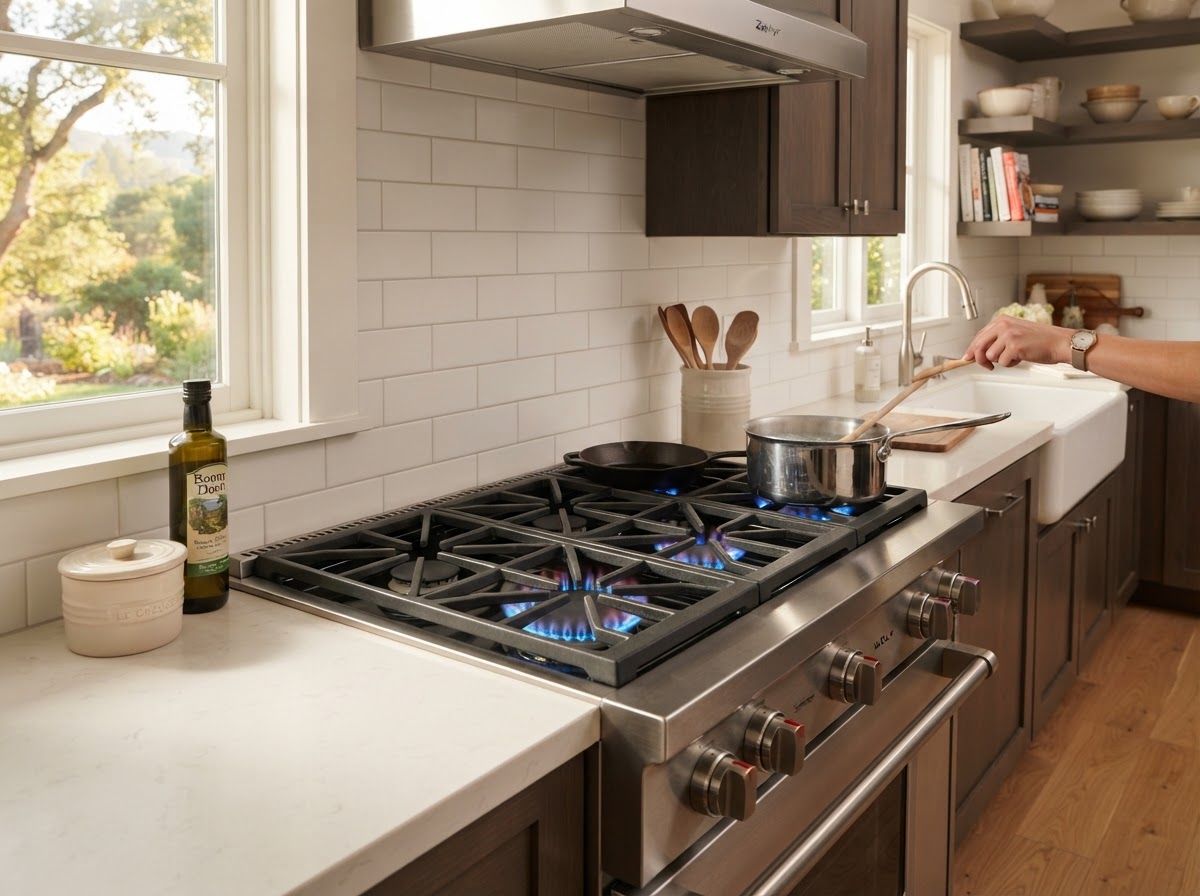
When preparing a large holiday meal, you may notice that a burner isn't behaving the way it normally does. Many properly functioning gas cooktops produce steady, mostly blue flames. However, the expected flame appearance depends on the appliance design, and some appliances may normally show yellow flames.
Changes worth investigating include:
- Flames that suddenly become unusually yellow or orange
- Burners producing weak or uneven flames
- Flames that repeatedly go out
- Soot accumulating around the burner or cookware
- Burners that struggle to ignite consistently
These symptoms do not automatically mean the gas line needs repair. They may indicate burner contamination, an appliance malfunction, an airflow problem, or another issue requiring professional evaluation.
Unusual flames, soot, or poor combustion may also signal a carbon monoxide hazard. Make sure your home has functioning carbon monoxide alarms installed according to manufacturer instructions and applicable requirements. If a carbon monoxide alarm sounds, get everyone into fresh air immediately and call emergency services from outside.
4. Your Oven or Cooktop Isn't Performing Consistently
Holiday meals require dependable cooking equipment, especially when multiple dishes need to be prepared at different temperatures. A gas appliance that suddenly begins performing differently may need professional attention.
Common symptoms include:
- An oven taking longer than usual to preheat
- Burners that frequently fail to ignite
- Cooking temperatures that fluctuate unexpectedly
- A gas appliance shutting off without explanation
- Multiple appliances experiencing unusual performance changes
Sometimes the problem is isolated to the appliance. In other cases, the gas supply, regulator, piping, or connections may need evaluation. A qualified professional can help determine whether the problem involves the appliance or the gas supply system.
Avoid repeated attempts to ignite an appliance that is malfunctioning. If you suspect leaking gas, follow emergency evacuation procedures rather than troubleshooting.
5. You See Corrosion, Damage, or Deteriorating Gas Piping
Gas lines and exposed connections can deteriorate or become damaged over time. Outdoor gas piping may be exposed to moisture, weather conditions, accidental impacts, and nearby property maintenance activities.
Visible warning signs may include:
- Significant corrosion or rust on exposed piping
- Bent, dented, or visibly damaged pipes
- Loose or displaced supports
- Damaged appliance connectors
- Signs that a vehicle, landscaping tool, or other equipment has struck a gas line
Visible corrosion alone does not establish that a leak exists, but damage to gas piping deserves professional assessment. Never attempt to straighten, patch, tighten, or replace a damaged gas connection yourself. If damage suggests an active leak, evacuate the area and contact emergency services or the gas utility.
6. Vegetation Near Underground Gas Lines Is Dying Unexpectedly
Not all potential gas line problems are visible above ground. In some situations, leaking underground natural gas can displace oxygen in the surrounding soil and affect nearby vegetation.
Possible warning signs include an isolated patch of dying grass, plants that suddenly discolor, or vegetation declining without an obvious explanation near a known underground gas line. These symptoms can also result from irrigation problems, pests, disease, or other environmental conditions. They do not confirm a gas leak.
However, unexplained vegetation damage near gas piping should not be dismissed. Never dig to investigate a suspected gas leak. If you believe underground gas may be escaping, keep people away and contact the gas utility or emergency responders. For planned excavation, landscaping, fencing, or outdoor kitchen installation, contact California 811 before digging so participating utilities can mark their underground facilities. Utility-owned and privately owned lines may require different locating arrangements.
7. Your Gas Meter or Outdoor Connections Show Signs of Trouble
Your home's gas system extends beyond the kitchen. Depending on your property's setup, gas piping may also serve water heaters, fireplaces, outdoor grills, and other equipment. Outdoor gas meters, exposed piping, and equipment connections deserve attention when they show signs of damage.
Watch for unusual conditions such as impact damage near the meter, displaced piping, or damage around connections serving outdoor appliances. If you suspect that the meter or a connected line has been damaged, do not attempt repairs or adjustments. Contact the gas utility for meter-related concerns. A qualified plumbing or gas piping professional can evaluate customer-owned piping within the scope of their licensing and the utility's requirements.
What Happens During a Professional Gas Line Evaluation?
When there is no suspected active gas leak or immediate emergency, a professional evaluation can help determine whether repairs are necessary. Depending on the symptoms, the property, and the applicable requirements, an evaluation may involve:
- Reviewing the reported symptoms and affected appliances
- Inspecting accessible gas piping and connections
- Examining visible signs of corrosion or damage
- Using appropriate leak detection or pressure-testing methods when warranted
- Determining whether the concern involves utility equipment, customer-owned piping, or an appliance
- Explaining recommended repair or replacement options
Some repairs may require permits, inspections, or coordination with the gas utility. The goal is to identify the actual source of the problem rather than replacing parts or making adjustments based on guesswork.
How to Prepare Your Gas Appliances for Holiday Cooking
A little preparation before hosting guests can help you identify ordinary appliance problems before your kitchen becomes busy. Consider these practical steps:
- Pay attention to changes in how your gas appliances normally operate.
- Keep burner areas clean according to the manufacturer's instructions.
- Make sure carbon monoxide alarms are functioning properly.
- Keep combustible materials away from cooking equipment.
- Schedule professional service for recurring ignition or performance problems.
- Know how to contact your gas utility in an emergency.
Do not conduct do-it-yourself gas leak tests, disconnect gas lines, or attempt repairs to gas piping. If you suspect a gas leak at any point, evacuate immediately and contact the appropriate emergency service or gas utility from a safe location.
Gas Line Installation and Repair Support in Livermore
When your gas appliances are showing unusual symptoms, getting the right professional evaluation can help you understand the problem and your available options. The Otter Squad Plumbing & Drain Cleaning provides plumbing services in the Livermore area, including gas line installation and repair services.
If you're experiencing recurring appliance issues or have questions about gas piping service, contact The Otter Squad to discuss your concerns and request an appointment for services the team provides. Call (925) 397-2271 or use the contact page to reach the team.
About this content: Reviewed for plumbing accuracy by Alfredo Ortiz, Owner, The Otter Squad · C-36 & C-42 · CSLB #1053855 · 30+ years trade experience
Last verified: 2026-10-26. Regulations change — always confirm current requirements with your city or sanitary district.