Commercial Sewer Repair Across the Bay Area
A commercial line that keeps backing up puts tenants, health inspections, and your schedule at risk, and guessing at the fix is the expensive way to handle it. Commercial sewer repair is the diagnosis, repair, or full replacement of the sewer lines that carry waste out of a commercial building, from a restaurant lateral to a sanitary-district collector main, using open-cut excavation, pipe bursting, or CIPP lining. The Otter Squad handles commercial sewer repair for facilities managers, property managers, general contractors, and restaurant owners across all nine Bay Area counties, and we camera-verify every line before we choose a method or hand you a bid, so you pay for the fix your pipe actually needs. Licensed CSLB #1053855, C-36 and C-42, union labor, available 24/7 at (925) 397-2271, and every job carries our promise: Clear Lines or You Don't Pay a Dime.
The Otter Squad Guarantee
Clear Lines or You Don't Pay a Dime. If we can't clear your blocked line using our standard drain clearing procedure, you don't pay for the attempt.
Commercial Sewer Capabilities:
- Commercial Sewer Repair
- Trenchless Commercial Replacement
- Heavy Excavation & Tie-ins
- Camera Inspection & Condition Reports
- Municipal & Public Works Sewer
- Prevailing-Wage Union Crews
When to call us
A commercial backup rarely gives much warning. These are the signs that point to the main line, not a single fixture, and that are worth a camera before the next tenant complaint or inspection.
- Multiple fixtures or floor drains backing up at once across a building or tenant space, which points to the main line, not one fixture.
- Sewage odor or standing wastewater in a commercial kitchen, restroom, or loading area, which is potential immediate-health-hazard territory (see the first FAQ).
- A CCTV report showing a collapsed, offset, cracked, or root-choked line.
- Repeated hydro-jetting or snaking that stops working within weeks, a sign the cable is riding past a structural defect.
- A health inspector notice or property-management citation tied to a sewer or plumbing violation.
- Settling, sinkholes, or wet turf and pavement above a suspected line in a parking lot or courtyard.
- A tenant improvement, lease turnover, or property-purchase inspection that flagged aging clay or cast-iron pipe.
- A grease-driven restaurant or food-service backup that returns after every cleaning.
Open-Cut, Pipe Bursting, or CIPP Lining: How We Decide for a Commercial Line
There are three ways to fix a failed commercial sewer line, and the camera picks the one your pipe needs, not a salesman. Open-cut digs the run up and replaces it, pipe bursting pulls a new line through the old one from small access pits, and CIPP lining cures a new jointless pipe inside the existing one through a manhole or cleanout. We camera the full length first, show you the footage, and match the method to what the pipe, the depth, and the site allow.
CIPP, cured-in-place pipe, is the trenchless option facilities managers ask about most, because it works without opening the ground. A resin-saturated liner is inserted through an existing access point, inflated against the old pipe wall, and cured into a new pipe within the old one. The method is standardized in North America under ASTM F1216 and runs on diameters from roughly 2 to 110 inches, covering everything from a restaurant lateral to a sanitary-district collector main. Our CIPP pipe lining page covers where lining fits and where it does not.
Pipe bursting is the middle ground: the old pipe is too far gone to line but still traceable, so we pull a bursting head through it, fracture it outward, and drag a new fused line in behind. It is the same equipment we use on residential trenchless sewer replacement, scaled up for commercial runs. Open-cut still wins where a section is fully collapsed or a shallow run is cheaper to dig. Trenchless matters more on a commercial site because the ground over your line is usually a parking lot, loading dock, or storefront, where every foot of trench is lost revenue and restoration.
How a Commercial Sewer Repair Runs, From First Call to Signed-Off Permit
Every commercial job runs in the same order, and no method or number is committed before the camera has been down the line. The disruptive work is scheduled around your hours wherever the site allows.
- 1
Free assessment.
Call (925) 397-2271 or request a quote, describe the symptoms, and send any existing CCTV report or site plan. The assessment is free; the work is quoted, never sold off a rate card.
- 2
Camera inspection.
We run a camera the full length of the line, confirm material and diameter, map depth and access, and record every defect while your team watches.
- 3
Firm written bid
before any work starts, for the full scope, with the method the camera supports and no add-ons mid-job.
- 4
Permits.
Commercial work needs a city or district plumbing permit, and work touching a public street, sidewalk, or right-of-way needs a separate encroachment permit from the agency that controls it. Fees and review times vary by jurisdiction; we pull them for your address.
- 5
Traffic control and site protection,
including a lane-coordination or traffic plan for a street or parking-lot cut, planned before the dig.
- 6
After-hours and weekend scheduling,
so a repair that would close a kitchen, store, or tenant floor is done while the business is dark.
- 7
Repair, backfill, and restoration:
we complete the open-cut, burst, or lining work, close the pits or trench, and restore the hardscape we opened.
- 8
Final camera confirmation
so you see the finished line clear end to end, plus the required jurisdiction inspection under the permit.
What Affects the Cost of Commercial Sewer Repair
There is no rate card for commercial sewer repair, and you should be wary of any contractor who quotes one over the phone. Two lines on the same block can differ by a wide margin once length, depth, access, and traffic control come into play, so the work is bid per job. What we promise is a free assessment, a camera-verified diagnosis, and one firm written bid before any work begins; we price from the footage, and if the honest fix is a spot repair rather than a full replacement, that is what we bid. These are the factors that move the number.
- •Scope and length of the run, from a short spot repair to a full building-to-main line.
- •Depth of the existing pipe, since deeper lines mean deeper excavation or larger access pits.
- •Pipe material and diameter, and how many bends and junctions the run has.
- •Number and location of access points, and whether an existing manhole or cleanout can be reused.
- •Whether the work touches a public street or sidewalk, which adds an encroachment permit, traffic control, and concrete or asphalt restoration.
- •After-hours or weekend labor to keep a business open during the repair.
- •Permit and inspection fees for the governing city or district.
- •Upsizing the pipe diameter where the building needs more capacity than the old line carried.
What We See on Bay Area Commercial Sewer Jobs
The pipe under a Bay Area commercial building is usually about the age of the building above it, and the region's older commercial cores still run the materials their era used. On our jobs that means two failure stories over and over: vitrified clay and cast iron. Which one you have, and whether it can be lined, burst, or has to be dug, is a question a camera answers, not the building's age.
Vitrified clay pipe was the standard for sewer mains and laterals from the late 1800s through most of the 20th century, and much of it is still in the ground because clay resists the sulfuric acid sewer gas generates, the way metal does not. Its weakness is mechanical: clay has low tensile strength and is brittle, so it fractures under traffic, settlement, and root pressure, and it is joined in short sections only a few feet long, so those bell-and-spigot joints are where roots get in and the line fails. Cast iron fails the opposite way. Common in commercial and institutional buildings through the mid-20th century, it corrodes from the inside by graphitization, a rust-scaling that leaves a pipe holding its shape but with almost no structural strength; the trade rule of thumb is to replace it once wall loss passes about 50 percent. Downtown Livermore, Oakland, San Jose, and San Francisco all have older commercial cores still draining through one of these two.
Grease is the other constant, and it is a commercial problem more than a residential one. A restaurant tenant that keeps backing up is usually fighting fats, oils, and grease on the pipe wall, and scheduled commercial hydro jetting is often what keeps a marginal line in service between repairs. When jetting stops holding, the camera usually finds a structural defect under the grease, and that is when repair, not cleaning, is the answer.
Commercial Sewer Repair Across All Nine Bay Area Counties
We take commercial sewer work across the entire Bay Area, from Livermore and the Tri-Valley out to the East Bay, the Peninsula, the South Bay, San Francisco, and the North Bay. Our crews are union, UA-signatory labor, licensed under CSLB #1053855 for C-36 plumbing and C-42 sanitation systems, and available 24/7 for emergencies that cannot wait for business hours.
For work near public agencies, the union point matters in a specific way. Under California law, workers on public works projects must be paid a prevailing wage set by the Department of Industrial Relations, and the DIR bases those rates largely on the collective-bargaining agreements for the trade and region. Because prevailing wage is pegged to union scale, signatory contractors are structurally built to meet a public agency's wage standard, and we provide prevailing-wage-capable union labor for commercial and sanitary-district work on that basis.
Wherever the job is, we confirm the governing city or district and its permit path for your exact address before any work starts, camera the line, and put the method and price in writing. Our full range of commercial capabilities is on our commercial sewer contractor page.
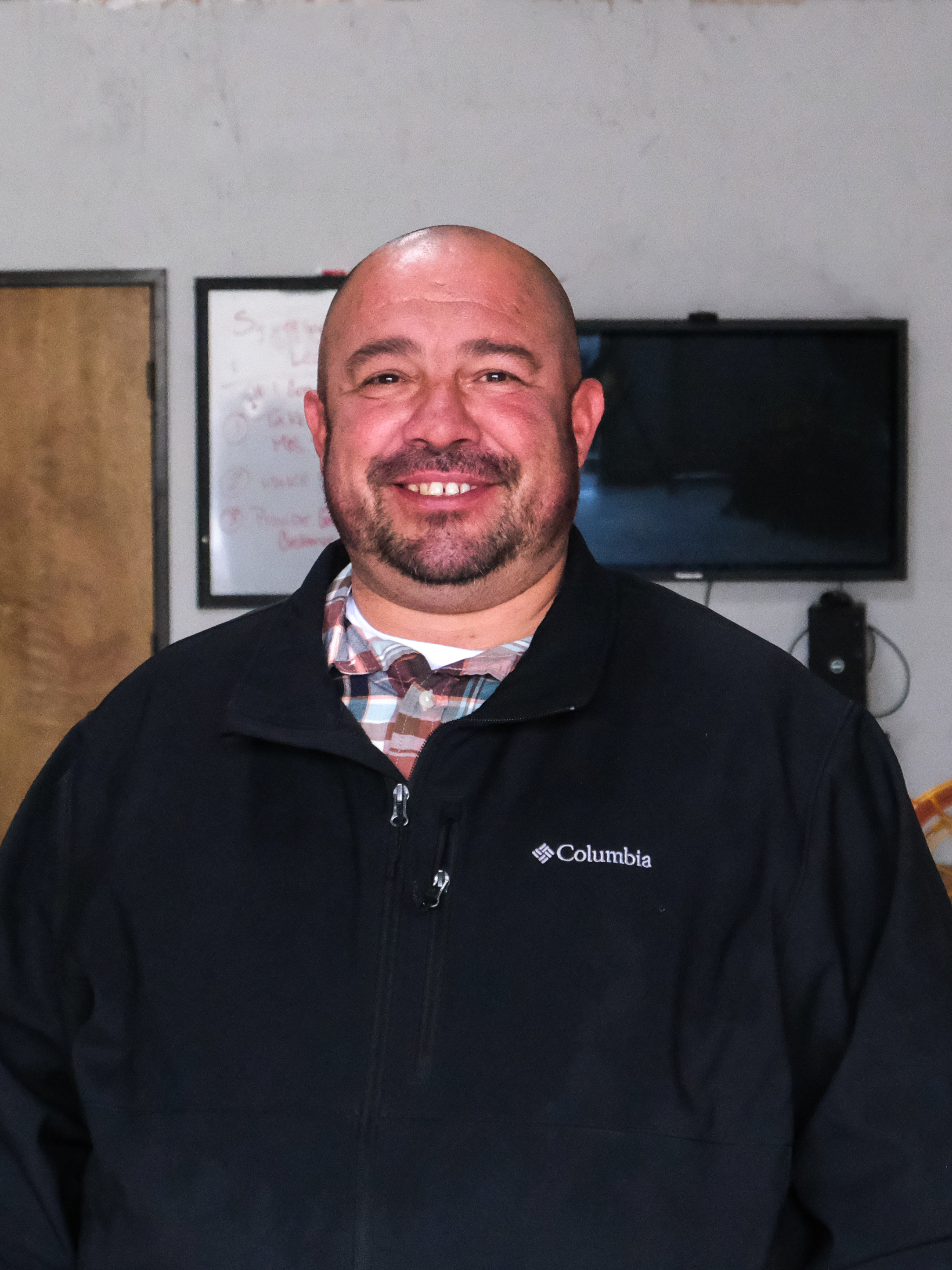
Alfredo Ortiz
Owner, The Otter Squad · C-36 & C-42 #1053855
I am Alfredo Ortiz, and I have spent more than 30 years in sewer and drain lines. The Otter Squad is my family's company, Latino-owned, licensed under CSLB #1053855 for C-36 plumbing and C-42 sanitation, and staffed by union, UA-trained crews. On a commercial job the stakes are different than a house: a backed-up line can close a kitchen or a floor of tenants, so my rule is the same but it matters more. The camera goes down first, your team watches what I watch, and you get one written bid before anyone digs. If a lining or a spot repair solves it, I am not going to sell you a full dig. And if we do the work and your line is not clear, you do not pay a dime. Call me any time, day or night, at (925) 397-2271. Alfredo Ortiz, CSLB #1053855.
Alfredo Ortiz · Owner, The Otter Squad · C-36 & C-42 #1053855 · 30+ years in the trade
How we work
Diagnose first
We find the real problem before we quote, so the fix matches what is actually wrong, not a guess.
Explain clearly
We show you what we found in plain language, with photos or camera footage.
Honest options
Real choices and upfront pricing, and we point you to the honest path, not the priciest one.
Done the right way
Tidy, licensed work, backed by the Otter Squad Guarantee.
Why Livermore chooses The Otter Squad
The Bay Area does not run on one sewer system. It runs on dozens: EBMUD and a string of East Bay cities and sanitary districts, Central San and West County Wastewater in Contra Costa, San Jose's own utility and West Valley Sanitation in the South Bay, a row of Peninsula cities each with its own permit rules, and San Francisco's single combined system citywide. A crew that works commercial jobs across all nine counties has to know which agency governs your address, and which permit path it demands, before the first truck rolls. We confirm the governing utility and permit requirements for your exact property as part of the written scope you approve.
We're family-owned and Latino-owned, led by Alfredo Ortiz with 30+ years in the trade, fully licensed (C-36 & C-42 #1053855), bonded, and insured. Every job is backed by the Otter Squad Guarantee.
Looking for more?
Explore all of our commercial and municipal sewer services across the Bay Area.
Commercial & Municipal Sewer →
Request Commercial Assessment
Prefer to talk now? Call (925) 397-2271. We answer 24/7.
Frequently Asked Questions
Problems With Water? Call the Otter.
We answer 24/7. Diagnose first, honest options, upfront pricing.