What a Sewer Camera Inspection Reveals Before Bay Area Winter Rains
1. See What Is Underground Before Winter Rains Arrive
A sewer camera inspection provides a clear, high-definition look inside your private sewer lateral before seasonal rain puts additional stress on local drainage systems. October and November are prime months for Tri-Valley property owners to identify hidden concerns while there is still time to plan an orderly repair instead of reacting to a messy, stressful backup.
Because private sewer laterals are buried beneath lawns, driveways, and patios, problems develop quietly out of sight. Slow drains, faint unpleasant odors, recurring toilet clogs, and gurgling fixtures all point to trouble below ground. As autumn gives way to winter rains, saturated soils, shifting ground, and heavy utility loads make pre-existing pipe flaws impossible to ignore. A camera inspection lets you see exactly what is happening inside the line without destructive digging.
2. What a Sewer Camera Inspection Finds in Your Line
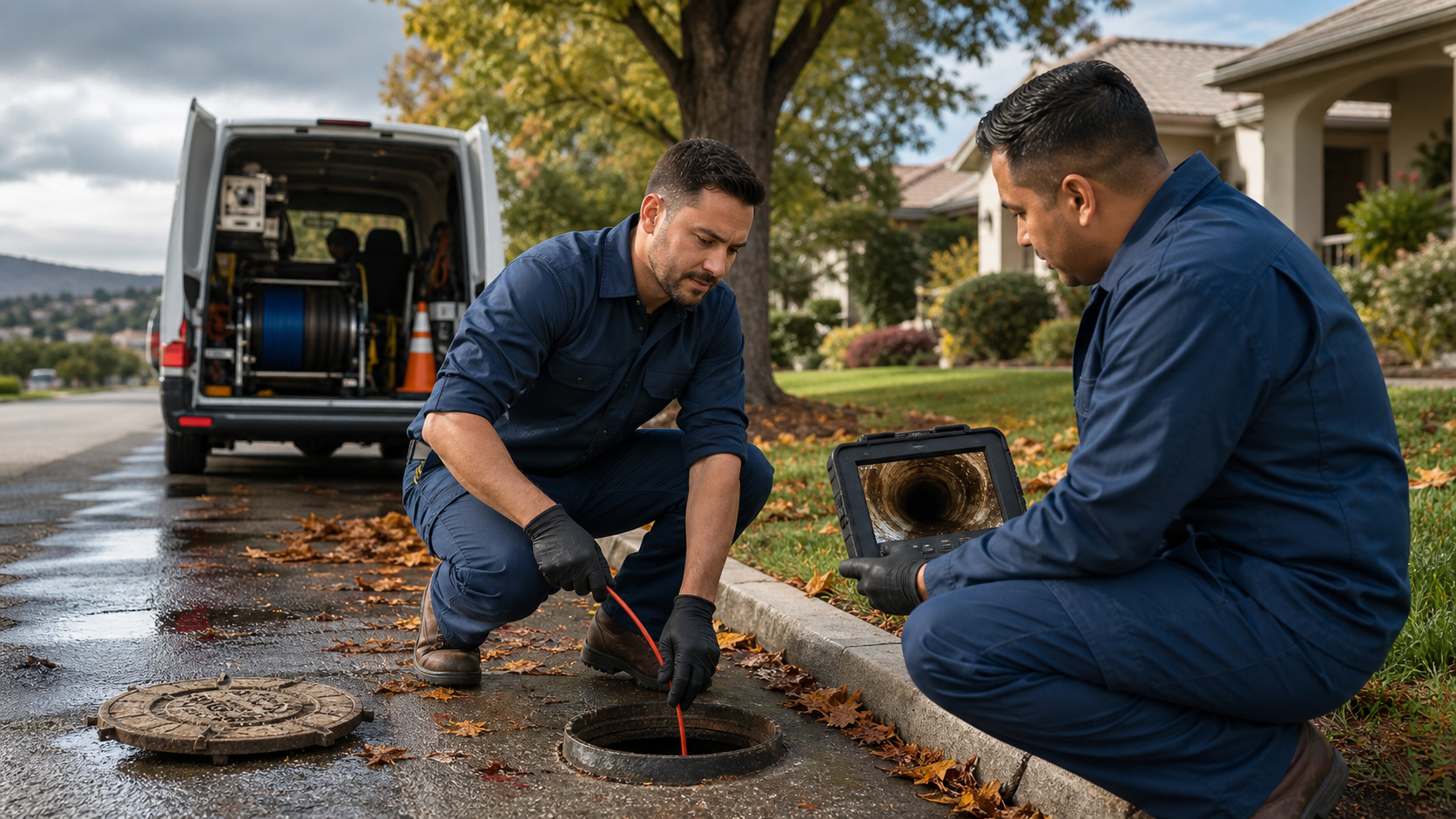
During a professional camera evaluation, a licensed plumbing technician feeds a specialized waterproof camera on a flexible push rod through an accessible drain or outdoor cleanout. The live video stream shows the entire interior of the pipe on a high-resolution field monitor, giving both the technician and the property owner a verified picture of the pipe's structural health and flow condition.
Footage accurately identifies conditions that no snake can reveal:
- Tree root intrusion: Roots naturally seek moisture through minute cracks or loose joints, rapidly expanding into dense root balls that trap toilet paper and solids. Learn more in our guide to tree roots in sewer lines.
- Grease, scale, and mineral buildup: Accumulations on pipe walls narrow the flow diameter, creating friction that catches solids and leads to slow drainage.
- Cracks, corrosion, and separated joints: Aging materials like vitrified clay, cast iron, or Orangeburg pipe develop stress cracks and offset joints from ground movement over time.
- Foreign objects lodged in the run: Wipes, sanitary items, toys, or construction debris caught on burrs or protrusions inside the pipe.
- Low spots (bellies): Sagging sections where standing wastewater pools, dropping suspended solids and creating repeat chronic blockages.
Sewer cameras also feature built-in locating sondes. The technician can trace the camera head from above ground with an electronic receiver, pinpointing the exact depth and location of a defect beneath your yard or concrete. That eliminates guesswork and prevents unnecessary excavation.
3. Common Sewer Problems Winter Rains Can Make Worse
Rainfall does not create brand-new sewer defects overnight, but seasonal wet weather routinely exposes weak points that were already developing. Understanding how winter conditions interact with your plumbing helps prevent unpleasant surprises:
Expansive Clay Soil Movement
The Livermore-Amador Valley is famous for expansive adobe clay soils. During dry summer months, clay soil contracts and cracks. When steady winter rains arrive, the soil absorbs moisture and swells with tremendous hydraulic pressure. This swelling and shifting can jar fragile clay pipe joints out of alignment or crush brittle sections that were already weakened.
Aggressive Thirsty Roots Finding Wet Joints
Mature trees like redwoods, oaks, and eucalyptus search aggressively for water. Tiny root hairs penetrate hairline fractures or old mortar joints. As rain begins, roots experience rapid growth spurts, choking off the interior diameter and snagging household paper.
Municipal Main Surcharge & Infiltration
During atmospheric rivers or severe Bay Area downpours, public sewer mains can experience groundwater infiltration. When city sewer lines run full, a private lateral that is already sluggish or bellied has a much harder time discharging wastewater, pushing sewage upward into ground-floor fixtures or garage floor drains.
A single clogged sink is typically a fixture-level trap issue. But when multiple fixtures drain slowly at once, toilets gurgle when the shower empties, or wastewater backs up into ground-floor tubs, the restriction is almost always in the main sewer line.
4. How a Sewer Camera Inspection Guides the Right Repair
Clear camera footage matches the solution to the actual condition of the line. Guessing at a sewer problem leads to paying for temporary fixes or unneeded digging. At The Otter Squad, our camera-first philosophy guides every recommendation:
- When to Hydro Jet: If the pipe is structurally sound but coated in grease, mineral scale, or soft sludge, high-pressure hydro jetting scours the pipe walls clean without digging.
- When to Trenchless Reline (CIPP): If the pipe has joint root intrusion or minor cracks but maintains its round shape and grade, cured-in-place pipe lining (CIPP) creates a brand-new, seamless epoxy pipe inside the old one without tearing up driveways or landscaping.
- When to Pipe Burst: If the line is brittle, separated, or heavily root-damaged, pipe bursting fractures the old pipe outward while simultaneously pulling in a new, seamless HDPE line.
- When to Open-Cut: If a section is completely collapsed, back-pitched, or improperly sloped, a targeted, camera-located excavation replaces only the defective section.
5. When a Sewer Camera Inspection Can Prevent an Emergency
Waiting until raw sewage backs up across your bathroom floor leaves you with zero convenient options. An inspection is especially prudent before winter rains in scenarios such as:
- Homes built before 1985: Many Tri-Valley neighborhoods in Livermore, Pleasanton, and Dublin have original clay or cast-iron laterals nearing the end of their design life. Read our analysis of clay and Orangeburg pipe vulnerabilities.
- Recurring drain clogs: If a line needs snaking every 6 to 12 months, the cable is simply poking a temporary hole through a structural defect.
- Recent landscape or flatwork additions: Tree plantings, patio pours, or fence posts can shift or nick buried drainage lines.
- Buying or selling a property: A pre-purchase sewer scope protects buyers from inheriting an unexpected $10,000 to $20,000 replacement bill.
- Commercial properties & rentals: Restaurants, office buildings, and HOAs cannot afford business interruptions or health code citations caused by preventable backups.
6. Schedule Your Sewer Check Before the Rainy Season
Sewer problems do not get better with time. Catching root intrusion, minor joint offsets, and bellies early gives you control over the repair timeline and budget. Once winter storms begin, plumbing contractors are frequently overwhelmed with emergency calls, permit offices face weather delays, and saturated ground makes outdoor work more complex.
Taking one hour in autumn to inspect your lateral gives you certainty about what is running under your home, backed by recorded video footage and clear, upfront options.
Know What's Happening Inside Your Sewer Line
If you're dealing with recurring drain problems, unexplained backups, or concerns about your sewer line before the rainy season, The Otter Squad can help you determine whether a sewer camera inspection is the right next step. We show you the live video, explain the findings in plain language, and back our work with the Otter Squad Guarantee: Clear Lines or You Don't Pay a Dime.
7. Get Clear Answers About Your Sewer Line
A professional sewer camera inspection identifies the condition of your line and guides the right next steps. Our team uses clear visual findings to explain what is happening below ground without guesswork. Contact us or call (925) 397-2271 to schedule an inspection with The Otter Squad Plumbing & Drain Cleaning in Livermore, CA.